
St. George People Search Resources
St. George People Search usually begins with police, city hall, or the county page that sits just beyond the city line. The city has a strong public records path, and the steps are easy to follow once you know which office owns the file. A police request can show an incident trail. A city recorder record can show a council or ordinance trail. If the city file is not enough, Washington County and the state court system can carry the search the rest of the way without breaking the thread.
St. George Quick Facts
St. George People Search Sources
Start with the office that matches the record type. Police requests go to the police records division. City records go to the recorder. If the trail turns into a county case or a broader court question, Washington County and the state court system are the next step. That is the simple St. George pattern. It keeps the search focused and keeps you from asking one office to do work that belongs somewhere else.
The city police records division at St. George Police Department Records Division is the first stop when the clue is an incident, a report number, or a recent police event. The city also has a broader police records page at St. George Police Records, which gives the address and the main records contact. Those pages are the best way to get a city report started without guessing at the wrong desk.
| Office | Use |
|---|---|
| Police Records Division | Police reports, incident records, and follow-up questions |
| Police GRAMA Portal | Online requests and request tracking |
| City Recorder | City minutes, ordinances, resolutions, and archives |
| Washington County People Search Resources | County court, sheriff, recorder, and property fallback |
The police records division asks for enough detail to find the file. That usually means a name, a date, a time window, and the place of the event. A narrower request works better than a broad one. It gives staff a cleaner way to find the report and keeps the request from being bounced back for more detail. That matters in St. George because the city keeps police, recorder, and request work in different lanes.
The GRAMA portal is also helpful because it lets you track the request instead of waiting blind. That is useful when you need a reply and want a record of the request itself. It gives the St. George process a clean paper trail from the first ask to the final response.
The police records division page at sgcityutah.gov is the best starting point when the search begins with a police event.
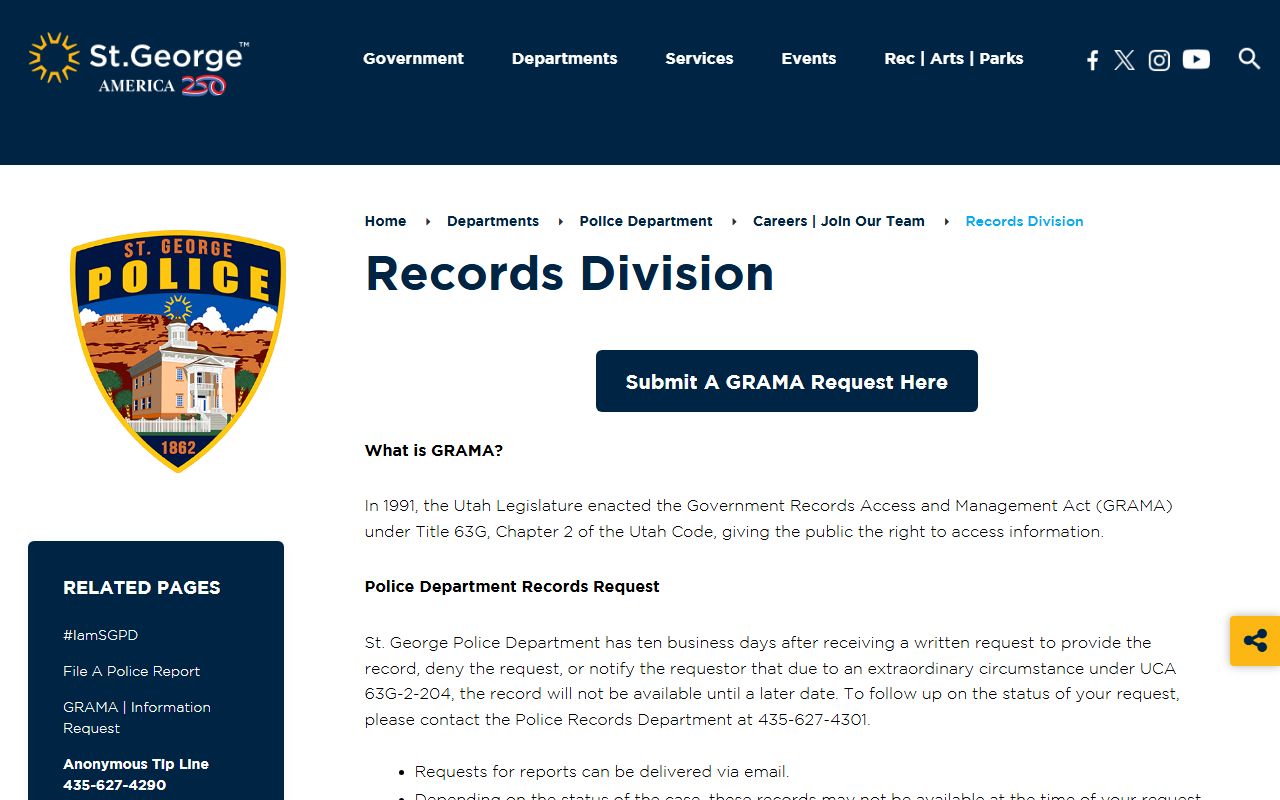
That image shows the St. George police records path and gives you the front door for a city report or incident file.
St. George People Search and Police Records
The police records pages are the most useful city source when a St. George People Search starts with an incident or report number. The records division can follow up on the status of requests, and the city explains the request process in its public records pages. That is important because it turns a vague question into a record request with a file path behind it. The police page is also the place to begin when the event is recent and still tied to the department that wrote the report.
City records in St. George can show the first public version of an event. They may include the report trail, the event date, and the parties involved. They can also point you to the next office if the matter moved into Washington County or into the court system. That makes the police records page a good first step and not the last one. It gives you the cleanest current path into the city record stack.
The city police records page at St. George Police Records is the best place to ask for the record itself rather than just the request route.
The city's GRAMA process also helps keep the search organized. It gives the city a clear way to route, track, and answer the request without losing the trail in email threads or phone calls. That is useful when you want the request to stay in one place from start to finish.
St. George People Search at City Hall
City hall records are the second major lane for a St. George People Search. The city recorder keeps council minutes, ordinances, resolutions, contracts, and historical city documents. That matters when your search is about a city decision, a public hearing, or an issue that moved through municipal government. The recorder is the office that preserves the official copy, so it is the place to begin when the clue belongs to city hall rather than the police desk.
The recorder page at St. George City Recorder gives the office location, the contact number, and the public records path. The office is at 175 East 200 North, and the phone number is (435) 627-4002. That page is the right one when you need a city document that is official, civic, and not tied to a police event. It can also help when you are looking for a historical city record or a city code reference.
City hall records can show when a name, address, or issue became part of the public record. A council minute can show a vote. An ordinance can show a rule change. A public records request can show the path behind the answer. Those are different from police records, but they matter just as much when the search is about how a person or place moved through the city system.
The city recorder page at sgcity.org is the clean city hall entry when you need a city document and not a police report.
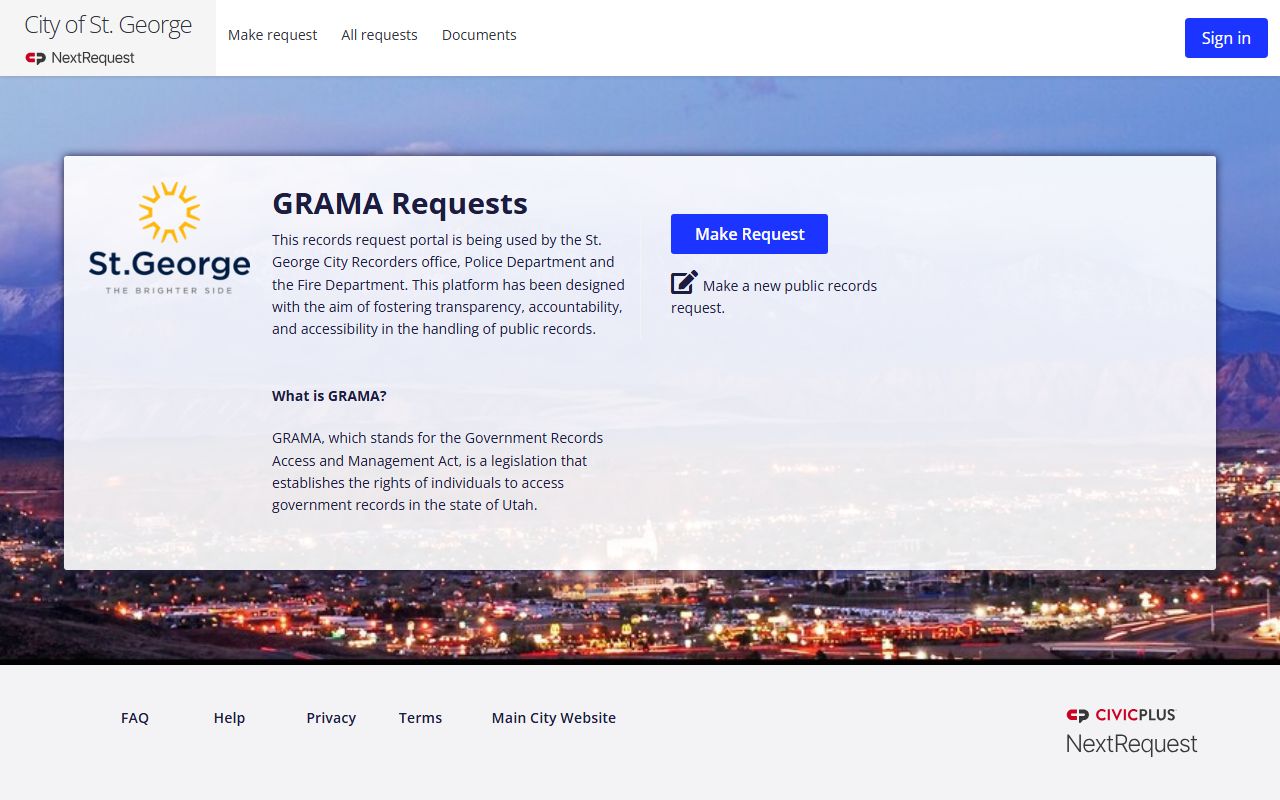
That image shows the St. George GRAMA path, which is the city's clean route for public records requests and tracking.
St. George People Search and County Files
Many St. George searches reach the county level. That is normal. A city report can point to a county case. A city address can point to a county property record. A city event can lead to a county request or a court file. When that happens, the Washington County page on this site becomes the next step, because it gathers the sheriff, court, recorder, and county request paths in one place.
The Washington County page at Washington County People Search Resources is the county fallback for St. George. From there, you can move into the sheriff office, the Fifth District Court, the county clerk, or property and records pages. That is the easiest way to keep the trail moving when the city file only gives you part of the answer.
The county page also works well with the state court system. Utah Courts XChange can help confirm the public court path before you request copies. The Utah Courts Directory and the Utah State Law Library are useful when you need the courthouse, the hours, or a place to research the file without guessing.
The county image at the St. George police records division page helps show how a city lead can move into the county record trail.
That county view is useful when a city police lead turns into a Washington County case or request file.
St. George People Search and Vital Records
Sometimes a St. George People Search needs proof of a life event rather than a court file. That is where the Utah Office of Vital Records and Statistics and the Utah State Archives become useful. The vital records office keeps statewide marriage and divorce records from 1978 to the present, which can help confirm a name or relationship. The archives become useful when the record is older and the city or county office points you toward historical material.
That makes the state page a useful backup when a St. George search needs a verified record instead of a fresh report. The archives are the historical backstop, and the vital records office is the current verification path. Together they give you a second lane when the city page is not enough. That is especially helpful in long record trails and family searches.
The Utah Office of Vital Records and Statistics is often the right next step when a St. George People Search needs marriage or divorce verification.
If the trail gets older, the Utah State Archives and Records Service can help with historical files and microfilm that are not sitting in a live city office anymore. That is the right move when the record has moved out of the front-end system.
St. George People Search Tips
Keep the request focused. A name, a date, a location, and a record type usually give the city enough to work with. That is important in St. George because police, recorder, county, and state records all live in different places. If you send a broad request to the wrong office, the search slows down. If you send a specific request to the right office, the answer is much cleaner.
It also helps to remember that one file may not tell the whole story. A police record can lead to a county case. A city minute can lead to a county document. A vital record can help confirm the same person in a different record set. That is why a St. George search works best when you move from one source to the next in order rather than asking every office to do the same job.
When you are done with the city pages, the Washington County page gives you the county version of the same trail. That is often the fastest way to finish a search without losing the thread.
Browse St. George People Search
Use the county and city pages when you want a wider Washington County search path. St. George is the city hub, but the county page fills in the sheriff, court, and record request steps when the trail leaves city hall.